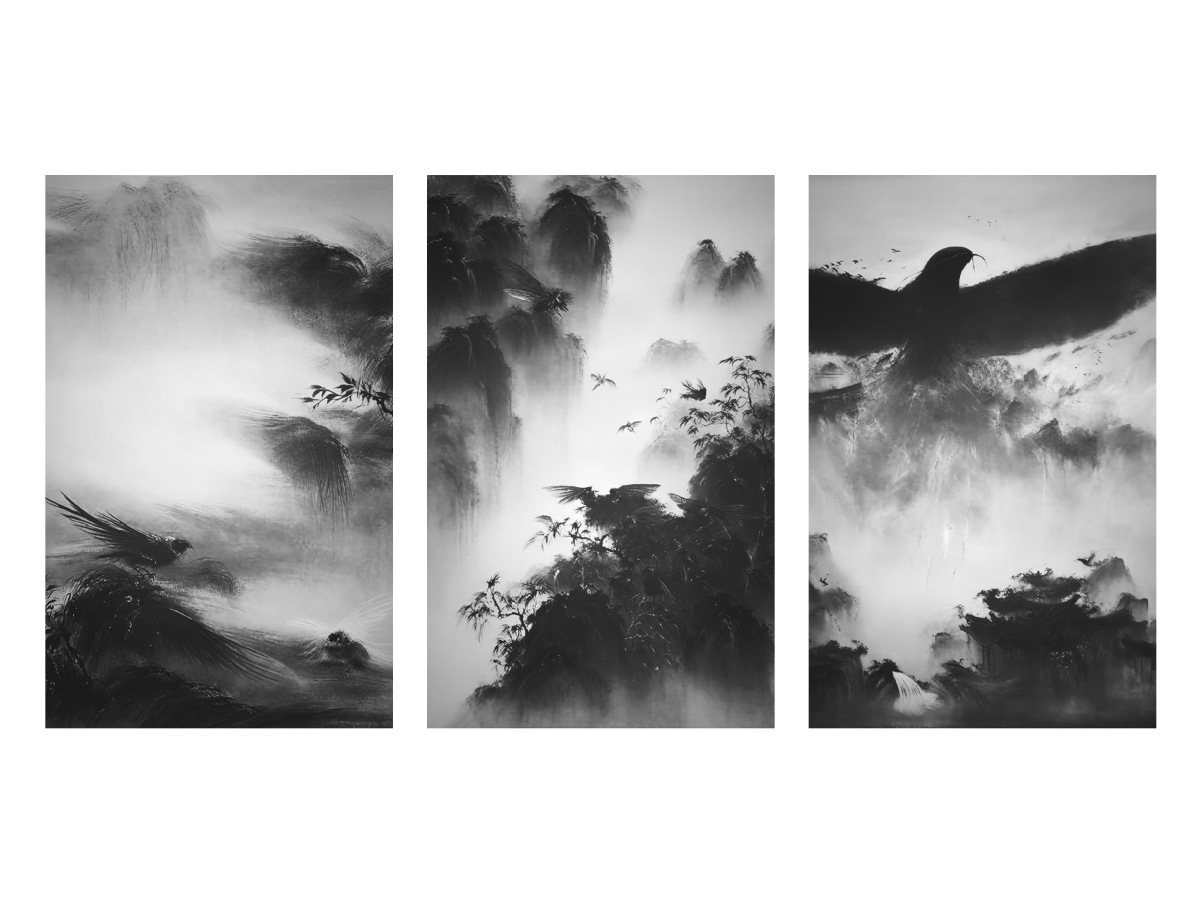
A Happy Excursion
Introduction
A Happy Excursion is a collection of artistic expressions inspired by the Taoist philosopher Zhuang Zi's (also spelled as Chuang Tzu) essay Xiaoyaoyou, which literally translates to Free and Easy Wandering or A Happy Excursion. This phrase has come to represent several creative works across different forms of art, including music, literature, and visual arts. The imagery from Zhuang Zi's work, particularly the transformation of the mythical fish Kun into the bird Peng, is a central theme that symbolizes vastness, freedom, and the mysterious wonders of nature. This theme has inspired musicians, visual artists, and writers to explore these concepts in their respective media.
Zhuang Zi's A Happy Excursion
A Happy Excursion is a foundational text in Taoist philosophy that explores the concept of true freedom and transcendence. It opens with the metaphor of a giant fish transforming into a bird, soaring freely in the vast sky, symbolizing the boundless potential of life unshackled by worldly constraints. Zhuang Zi contrasts this with smaller creatures, like cicadas and sparrows, whose limited perspectives keep them grounded. Through vivid imagery and philosophical musings, the essay advocates for detachment from societal norms, personal ambition, and external judgments to achieve spiritual liberation and harmony with the Tao, the natural way of the universe.
Musical Interpretations
A particularly notable musical interpretation of A Happy Excursion is a double concerto composed by Zhao Lin, which features the pipa, cello, and orchestra. This composition reflects the spiritual lives of ancient Chinese intellectuals and connects them with the contemporary world. It was performed by renowned artists, including cellist Yo-Yo Ma, pipa player Wu Man, and sheng player Wu Tong, along with the Silk Road Ensemble and the Hangzhou Philharmonic Orchestra, under the baton of conductor Yu Long.
The concerto is structured in three movements, each representing different aspects of the philosophical essay it draws from. The first movement is characterized by vibrant timbres and rhythms that depict ancient China, while the second movement offers a peaceful portrayal of spiritual experiences through Chinese poetry, calligraphy, and painting. The third movement connects to the present, with a renewed tempo and expressive music that conveys the search for carefreeness and idealism.
This piece was commissioned by the Beijing International Music Festival to celebrate its 21st anniversary, highlighting the blend of ancient philosophies with modern musical innovation.
Visual Arts and Illustrations
The essay A Happy Excursion has also inspired a collection of illustrations that use the imagery of the Kun transforming into the Peng as their central theme. These illustrations create a fantastical and mysterious atmosphere, incorporating elements such as mist-shrouded mountains and oceans. By contrasting this imagery with symbols like the cicada and the little dove, the illustrations invite viewers to ponder the vastness and mystery of the natural world.
Literary and Cultural Impact
The philosophical themes of A Happy Excursion have been explored in various literary and cultural contexts as well. For example, Lin Dihuan, a teacher and artist, was inspired by the essay to create a collection of comics titled Xiaolin Comics: A Happy Excursion in Life. These works focus on emotions and struggles faced by young people in urban settings, conveying inspiration through traditional Chinese ink-painting styles. The underlying message is about finding individual freedom by giving up selfish desires, as proposed by Zhuang Zi.
Dance and Performance Art
Contemporary dance has also found inspiration in A Happy Excursion, exemplified by choreographer Wan Su's dance piece Ren Xiao Yao, or Unfettered Happiness. This performance incorporates the themes of spiritual freedom and introspection, particularly reflecting on the emotions experienced during the COVID-19 pandemic. The dance piece features a range of performers from different disciplines and years, offering a shared expression of the search for spiritual freedom and resilience.
Overall, A Happy Excursion serves as a rich source of inspiration across many forms of art, allowing artists to explore the balance between ancient philosophies and contemporary expressions. Through music, illustrations, literature, and dance, Zhuang Zi's timeless ideas continue to resonate with audiences worldwide, offering a gateway to understanding the depth and complexity of human experience.








